Medical futility judgments
Five Days at MemorialMedical futility judgments at Memorial Medical Center were assessments that further treatment or attempted rescue was unlikely to benefit a patient. During the Katrina crisis, clinicians and nurses made such assessments amid failed power, severe heat, disrupted respiratory support, and a chaotic evacuation. Their judgments shaped whether patients would be moved and how they were treated, but the account also shows their limits: prognosis was uncertain, a DNR designation did not by itself settle what care was appropriate, and later findings about medication did not alone establish why a patient died or what a clinician intended.
Clinical Judgment Under Emergency Conditions
The setting for these decisions had been foreseeable in important respects. After Hurricane Ivan nearly struck in 2004, Memorial plant operations director Eric Yancovich studied storm-surge models and sketched the elevations of hospital entrances and outdoor equipment. He calculated that less than four feet of flooding in Magnolia Street could send water over the loading dock, while critical parts of the emergency power distribution system sat below ground or only slightly above it. He warned that even modest flooding could disable most of the medical center and predicted that patients might need to be moved to the Clara Wing. Proposed elevation of transfer switches and pumps was not carried out; the electrical work alone was estimated to cost more than a quarter of a million dollars, and Yancovich did not expect approval because of limited capital.
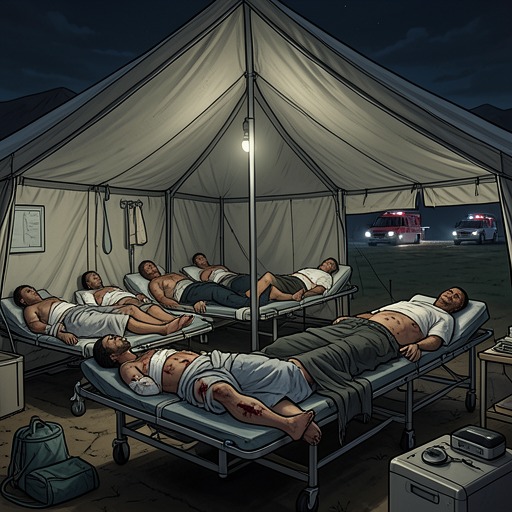
When the flood arrived, the generators were not the whole power system. Memorial’s three 750-kilowatt generators had already run for two days, although the disaster plan called for three days of support and the units were not designed for prolonged operation. Maintenance workers tried to restart failing engines, redirect electrical loads, and work through knee-deep basement water near transfer switches that appeared to be submerged. After two hours of efforts, the last generator failed at about two in the morning on August 31. The outage and the loss of systems such as vacuum suction intensified the danger to patients and narrowed the options available to caregivers. This did not itself establish that treatment was futile, but it formed the material circumstances in which staff judged whether patients could survive continued illness or the attempt to move them.
Prognosis, DNR Status, and the Decision to Move Patients
Karen Wynn brought extensive intensive-care experience to her view of the patients on the second floor. She knew that many LifeCare patients had multiple failing medical problems and depended on ventilators; she believed some had little prospect of breathing independently. After helping carry patients downstairs, she recalled their extreme heat and thought that without evacuation they might sustain irreversible brain damage. She also saw patients laboring for each breath in the oppressive conditions and believed they were suffering, including those who were not conscious.
Wynn believed that morphine and Versed could hasten deaths already in progress, while also believing that the same patients were unlikely to survive with or without the medication. She considered movement itself a serious danger: transporting patients through an opening in a machine-room wall, loading them onto a pickup, and taking them up to the parking garage seemed to her capable of precipitating death as well. Her reasoning therefore joined prognosis to the risks of both available paths, rather than treating non-treatment as the only possible source of harm. She did not examine every patient, and the account presents her assessment as a judgment formed from what she saw and heard and from decades of experience, not as a conclusion established by a complete examination of each person.
The case of Tesfalidet Ewale further distinguishes prognosis from DNR status. Ewale, a sixty-six-year-old Eritrean political asylee, had serious chronic illnesses and had previously been resuscitated. He had come off a ventilator and stabilized with a special oxygen mask, but his doctors, including Roy Culotta, considered another resuscitation futile given his condition and poor prognosis. His daughter had initially resisted the DNR designation. After the power failure, staff could not effectively suction his airways; at Culotta’s direction, Ewale received Ativan and morphine for comfort. He died after choking on secretions. Wynn’s recollection also records that his daughter had been told he would be airlifted, underscoring the difference between a clinical assessment of likely benefit and the unresolved practical question of whether evacuation could still occur.
Individual Decisions and the Limits of Certainty
When Anna Pou told John Thiele that the category 3 patients were too sick to move, he accepted her assessment without reviewing their charts. He saw severely ill people and believed they would not survive a trip to safety. His response illustrates how, in the emergency, judgments could rely on another clinician’s authority as well as on visible condition; it does not establish that every patient had been independently assessed or that the prognosis was certain.
Later evidence complicated any simple equation between a poor prognosis, medication, and death. In discussing Merle Lagasse, Culotta acknowledged that giving morphine had ended her life. Investigators then examined the breathing pattern he had described. Cheyne-Stokes breathing can precede death, but it can also occur in other circumstances, including sleep and conditions such as heart failure or brain damage. Agonal gasping, by contrast, is often associated with the final moments of life; experts differed over whether it was ethical to treat possible distress with medication that might suppress breathing and hasten death. The distinction mattered because an appearance of imminent dying did not, by itself, prove that death was unavoidable at that moment.
Forensic testing added evidence of exposure, not a complete answer about causation or intent. Because the recovered bodies had decomposed in the heat, Orleans Parish coroner Frank Minyard initially doubted that autopsies could establish whether lethal drug levels had been present in blood. A pathologist explained that drugs might leave traces in other tissues or in abdominal fluid. Samples from eighteen Memorial bodies were sent to a forensic laboratory; its initial report found morphine in nine cases and midazolam in about five or six. Those results documented substances in sampled remains, but the account does not treat detection alone as resolving whether a drug caused a particular death, whether death was intended, or whether a clinical judgment was justified.
Later Consequences and the Reversibility Test
The account places the crisis judgments against the longer emotional and legal aftermath. Gina Isbell later described poor sleep, nightmares featuring her patients, guilt about the staff she had chosen for the storm, and anger that help had come too slowly. She remained distressed by the patients’ deaths, while continuing to believe that she and her colleagues had done the best they could. These consequences show that an assessment made under pressure did not end when the immediate decision was over; staff continued to live with uncertainty about what their choices meant.
John Thiele’s later critical illness supplies a pointed comparison. After he suffered severe complications, he spent weeks in a heavily sedated, partly conscious state, and his survival appeared unlikely. A nurse who cared for him believed he seemed remorseful when they briefly discussed his role at Memorial, but Thiele later said he had not felt that way and remained confident in what he had done. He drew a distinction between his own condition and that of some patients he had helped inject: despite the grim prognosis and multiple signs associated with poor survival, his problems were potentially reversible. He said he would have continued treating a patient in his condition because recovery remained possible. Reversibility thus appears as a crucial element in his understanding of futility—not merely how bad a prognosis was, but whether treatment could still produce improvement.
The concept remains ethically consequential precisely because it is not a mechanical verdict. At Memorial, prognosis interacted with a failed infrastructure, constrained evacuation, DNR decisions, and the perceived risks of movement and medication. The later breathing analysis and toxicology findings exposed gaps between what caregivers believed, what observers could infer, and what evidence could prove. The account does not erase the urgency of those judgments, but it makes their uncertainty central: a belief that death was likely was not identical to proof that treatment could offer no benefit, and evidence that medication was present was not by itself proof of a particular cause or intention.